
Loading

Loading
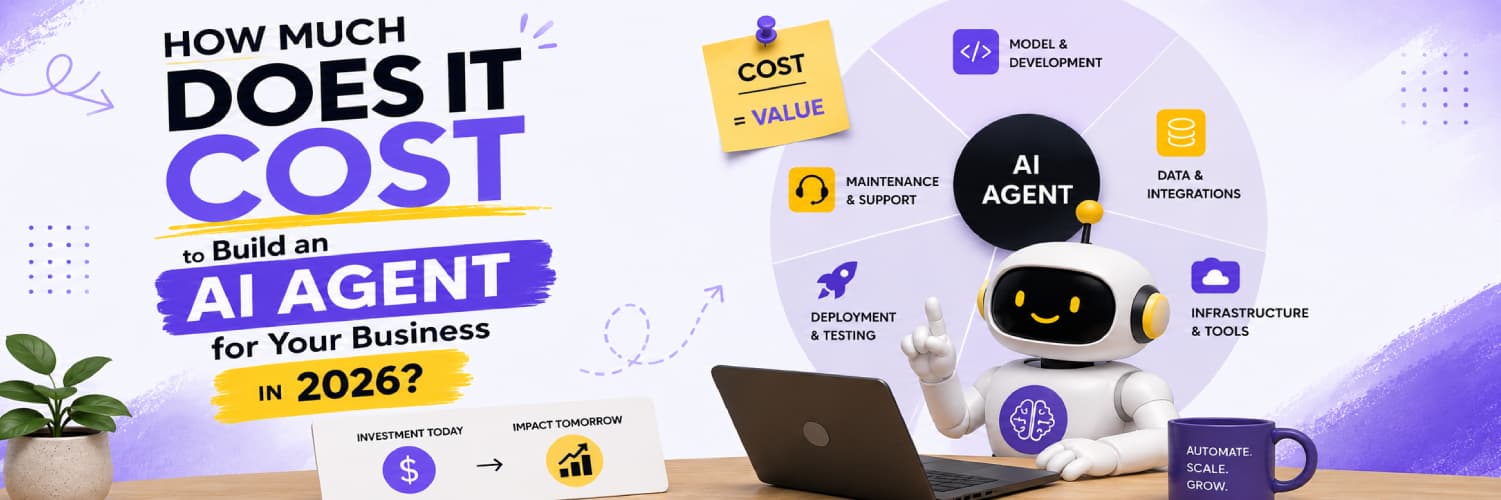
How Much Does It Cost to Build an AI Agent for Your Business in 2026?
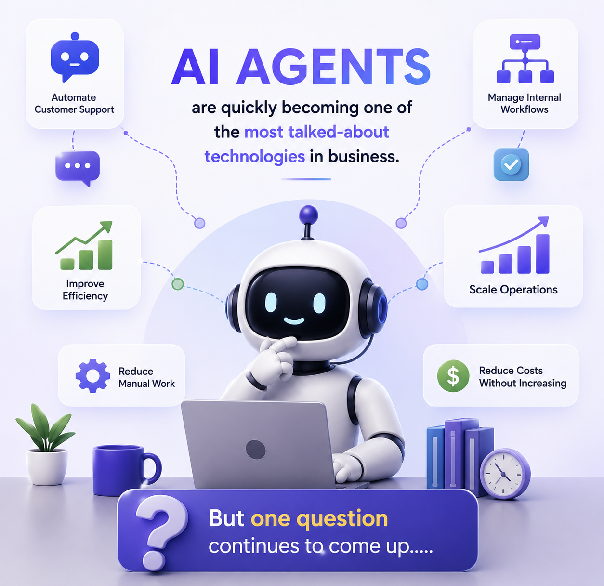
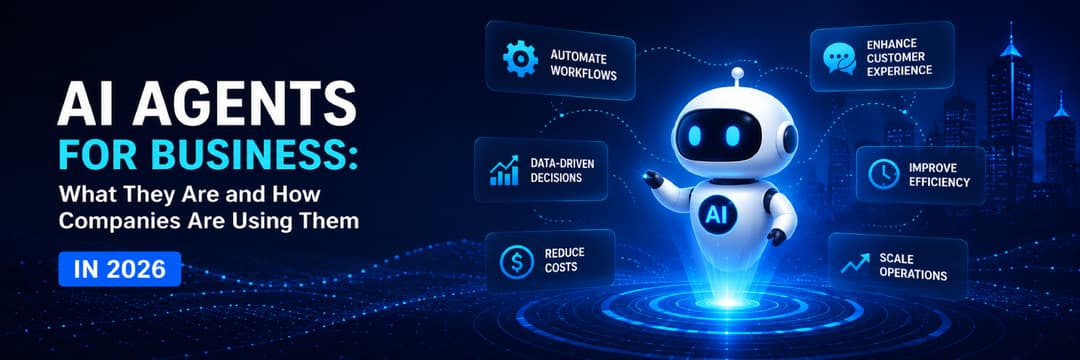
AI agents are quickly becoming one of the most talked-about technologies in business. From automating customer support to managing internal workflows, companies are investing in AI agents to improve efficiency, reduce manual work, and scale operations without significantly increasing costs.
But one question continues to come up.....
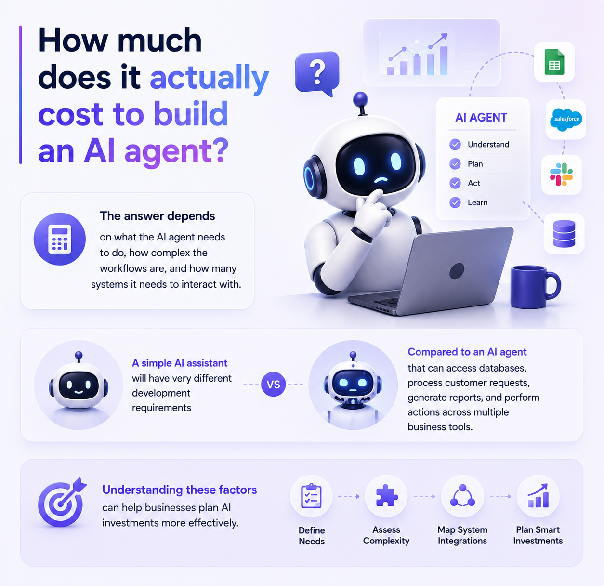
The answer depends on what the AI agent needs to do, how complex the workflows are, and how many systems it needs to interact with. A simple AI assistant will have very different development requirements compared to an AI agent that can access databases, process customer requests, generate reports, and perform actions across multiple business tools.
Understanding these factors can help businesses plan AI investments more effectively.
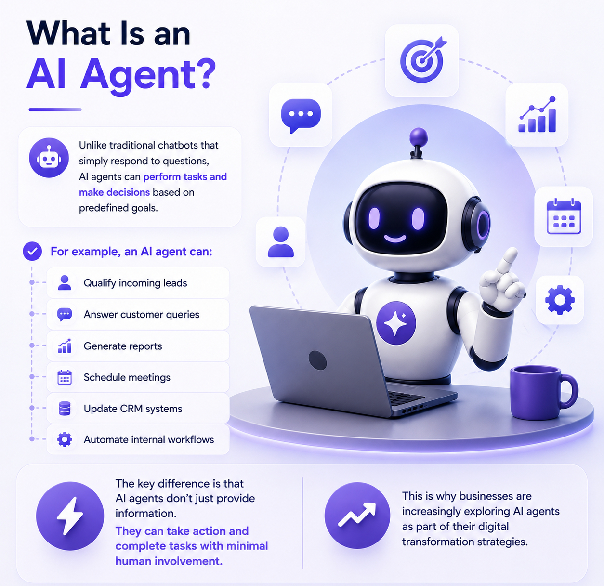
Unlike traditional chatbots that simply respond to questions, AI agents can perform tasks and make decisions based on predefined goals.
For example, an AI agent can:
The key difference is that AI agents don't just provide information. They can take action and complete tasks with minimal human involvement.
This is why businesses are increasingly exploring AI agents as part of their digital transformation strategies.
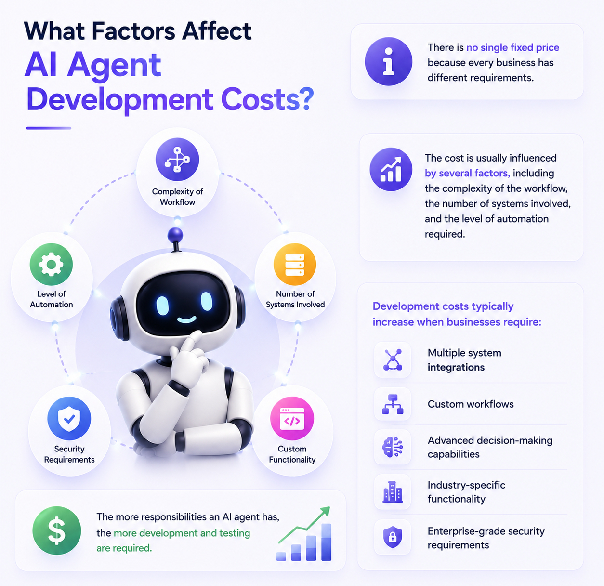
There is no single fixed price because every business has different requirements.
The cost is usually influenced by several factors, including the complexity of the workflow, the number of systems involved, and the level of automation required.
For example, an AI agent that answers website inquiries is much simpler than one that connects with multiple business applications, analyzes data, and executes actions automatically.
Development costs typically increase when businesses require:
The more responsibilities an AI agent has, the more development and testing are required.
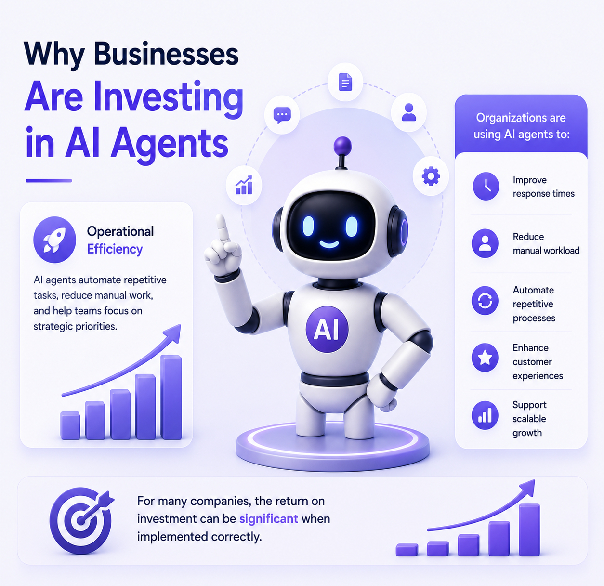
Companies are not investing in AI agents simply because they are trendy.
The primary reason is operational efficiency.
Many businesses spend countless hours on repetitive activities such as responding to customer inquiries, updating records, processing requests, and generating reports. AI agents can automate many of these tasks, allowing teams to focus on strategic work rather than routine administration.
As businesses grow, these efficiencies become increasingly valuable.
Organizations are using AI agents to:
For many companies, the return on investment can be significant when implemented correctly.
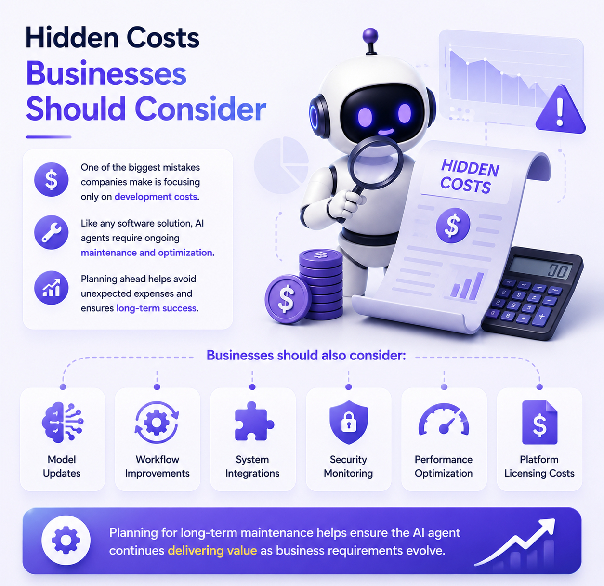
One of the biggest mistakes companies make is focusing only on development costs.
Like any software solution, AI agents require ongoing maintenance and optimization.
Businesses should also consider:
Planning for long-term maintenance helps ensure the AI agent continues delivering value as business requirements evolve.
Is Building an AI Agent Worth the Investment?
For businesses dealing with high volumes of repetitive tasks, customer interactions, or manual workflows, AI agents can provide substantial long-term value.
The key is identifying areas where automation can create measurable business impact. Companies that approach AI strategically often see improvements in productivity, customer experience, and operational efficiency.
Rather than replacing teams, AI agents are increasingly being used to help employees work faster and focus on higher-value activities.
Final Thoughts
The cost of building an AI agent in 2026 depends on your business goals, workflow complexity, and integration requirements. While development costs vary, the real value comes from creating systems that reduce manual work, improve efficiency, and support business growth.
As AI technology continues to evolve, businesses that invest in practical automation solutions will be better positioned to scale operations and stay competitive.
If you're exploring AI agents for your organization, understanding your workflows and automation opportunities is the best place to start.
Have questions or need assistance? We're here to help! Reach out to us today, and our team will get back to you as soon as possible.