

When and Why to Go Headless with Shopify
Choosing headless Shopify is not a technical upgrade—it is a strategic business decision. While headless architecture offers flexibility, performance, and scalability, it also introduces complexity that is not suitable for every business at every stage. This page explains when and why brands should consider going headless with Shopify, and when traditional Shopify setups may be the more effective and efficient choice.
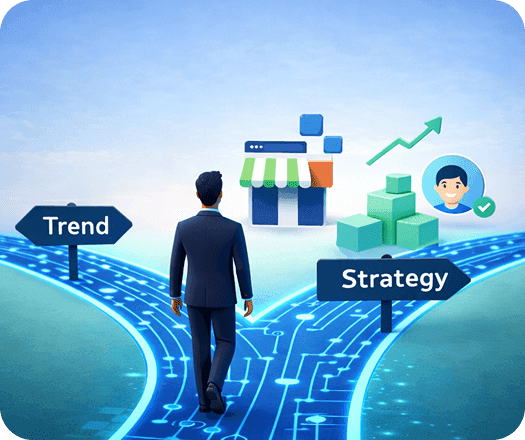
Why the Decision to Go Headless Is Strategic (Not Trend-Driven)
Many businesses consider headless Shopify because it is popular among large brands. In reality, headless architecture delivers value only when it aligns with business maturity, operational complexity, and long-term goals.
Going headless changes how teams:
- Build and manage storefronts
- Integrate systems and services
- Optimize performance and UX
- Plan for long-term scalability
Without strategic alignment, headless can increase cost without delivering proportional benefits.
Businesses considering headless should understand the architectural implications. See our Headless Shopify Architecture Guide

Assess Whether Headless Is Right for You
Use our structured decision framework to evaluate performance requirements, integration complexity, team capability, and long-term growth alignment.

When Headless Shopify Makes Sense
Headless Shopify is typically a strong fit when:
- Performance is a competitive advantage
- The brand operates across multiple regions or channels
- Custom user experiences are critical to conversion
- Integrations with ERP, CRM, or custom systems are complex
- The business has a clear long-term growth roadmap
In these scenarios, architectural flexibility becomes a necessity rather than a luxury.
When Traditional Shopify Is the Better Choice
Despite its advantages, headless Shopify is not always the right answer. Traditional Shopify setups remain highly effective for many businesses.
Traditional Shopify may be the better option when:
- Store complexity is low
- Speed to launch is a priority
- Internal technical resources are limited
- Business models are still being validated
Choosing simplicity when appropriate is a strategic decision—not a limitation.


Cost, Resources & Operational Considerations
Headless Shopify requires a different level of investment and planning. Teams must consider:
- Higher initial development effort
- Ongoing maintenance and governance
- Frontend and backend coordination
- Long-term ownership costs
The return on investment comes from scalability, flexibility, and performance—not immediate cost savings.
Common Mistakes When Choosing Headless
Some frequent mistakes teams make:
- Adopting headless too early
- Underestimating technical and operational complexity
- Choosing tools before defining strategy
- Assuming performance gains are automatic
- Ignoring long-term maintenance responsibilities
Avoiding these mistakes is often more important than the choice of technology itself.

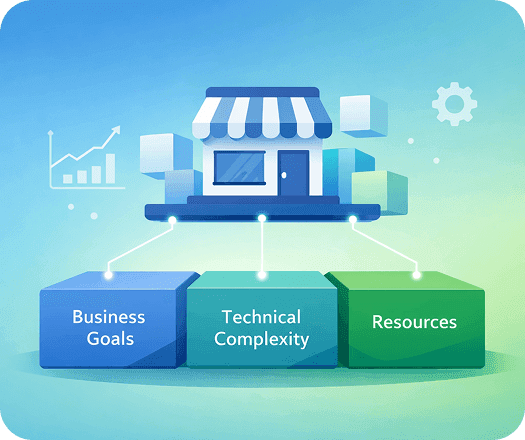
A Practical Decision Framework
The decision to go headless should be guided by business readiness, not industry noise. Factors such as team capability, growth trajectory, and customer experience goals must all be evaluated together.
Headless Shopify works best when the organization is prepared to manage architectural freedom responsibly.
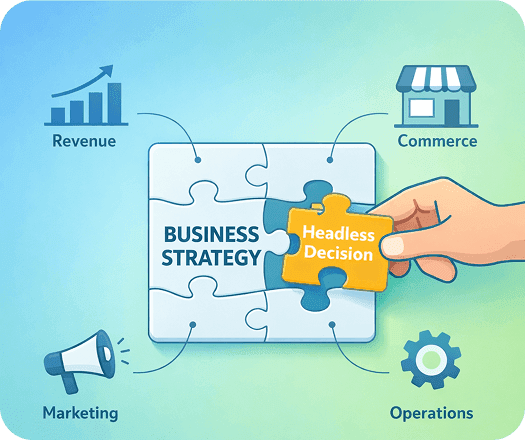
How This Decision Fits Into the Bigger Picture
The choice to go headless impacts architecture design, performance optimization, migration planning, and long-term scalability. It should never be evaluated in isolation.
This page focuses on decision-making clarity. A broader strategic perspective is covered in our complete Headless Shopify authority guide.
Migration readiness is another critical factor. Our Headless Shopify Migration & Readiness Guide explains how teams prepare.
Explore the Complete Headless Shopify Strategy Guide
Understand how architecture, performance, cost, and scalability align in real-world headless Shopify implementations.
Return to the Authority Guide