

Shopify Headless Stack: Hydrogen, Storefront API & Beyond
A headless Shopify implementation is only as strong as the technology stack behind it. The choice of frontend frameworks, APIs, CMS, and integration tools determines how fast teams can build, how reliably systems scale, and how easily new capabilities can be added over time.This page breaks down the modern Shopify headless stack—explaining how each layer fits together and what brands should consider when designing a composable, future-ready commerce architecture.
Understanding the Role of the Stack in Headless Shopify
Many discussions around headless Shopify focus only on the frontend. In reality, the stack is a combination of multiple independent systems working together through APIs.
A well-designed stack enables:
- Faster iteration cycles
- Reduced dependency between teams
- Greater flexibility in tooling
- Long-term architectural stability
Choosing the right stack is a strategic decision, not a tooling trend.
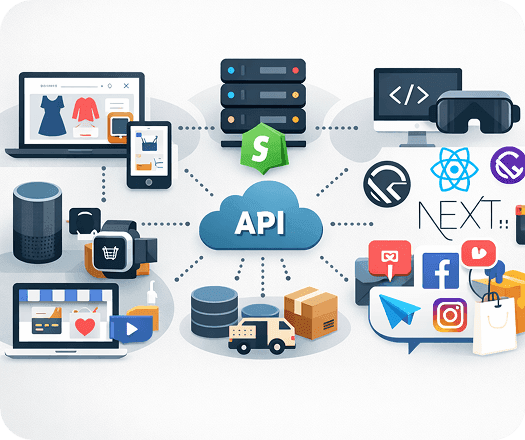

Validate Your Headless Stack Architecture
Use our evaluation checklist to assess frontend selection, API governance, CMS modeling, and integration structure before committing to development.

Core Layers of the Shopify Headless Stack
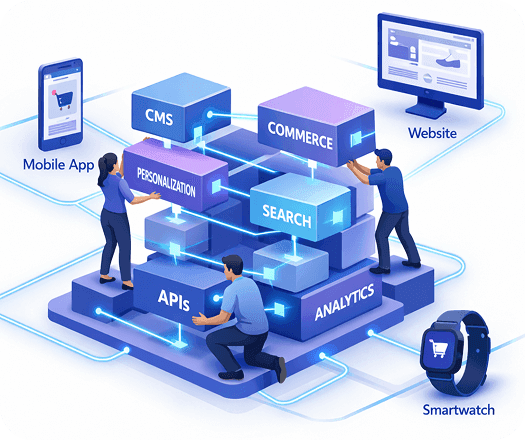
A typical Shopify headless stack includes:
Commerce Layer - A custom storefront optimized for performance, UX control, and scalability.
- API Layer - Storefront APIs and custom services enable secure data exchange.
- Content Layer (CMS) - A headless CMS manages content independently of the commerce backend.
- Integration Layer - CRM, ERP, analytics, marketing tools, and automation platforms.
- Each layer evolves independently while remaining connected through APIs.
Frontend Choices and Their Impact
Frontend choices directly affect performance developer velocity, and UX flexibility. A custom frontend allows teams to optimize rendering, control user journeys, and experiment without backend constraints.
The right frontend setup balances:
- Performance requirements
- Team expertise
- Long-term maintenance
- Scalability goals
Frontend decisions should align with business growth plans, not just launch timelines.


Importance of API Strategy
APIs are the glue that holds the stack together. A strong API strategy enables:
- Clean separation of concerns
- Faster integration with third-party systems
- Easier omnichannel expansion
- Reduced risk during future changes
Without proper API governance, even the best stack can become fragile.
Common Stack Design Mistakes
Common mistakes include:
- Choosing tools without a clear architecture plan
- Overloading the frontend with business logic
- Ignoring content team workflows
- Poor documentation and version control
- Designing for launch instead of scale
Avoiding these mistakes is critical for long-term success.
Many stack issues originate from weak architectural planning. See our Headless Shopify Architecture Guide

When a Composable Stack Makes Sense
A composable headless stack is most effective for brands that value flexibility, experimentation, and long-term scalability. It is particularly suited for teams managing complex workflows, integrations, or multi-channel experiences.
Simpler businesses may not need this level of modularity early on.
Choosing a composable stack depends on whether headless is the right strategic move. Our When to Go Headless with Shopify Guide explains this decision.
How the Stack Fits Into the Overall Headless Strategy
The stack is only one component of a successful headless Shopify initiative. Architecture, performance optimization, SEO strategy, and migration planning must work together.
This page focuses on stack composition. A broader strategic view is covered in the complete Headless Shopify authority guide.

Explore the Complete Headless Shopify Strategy Guide
See how stack composition, performance architecture, SEO planning, and scalability align in real-world headless Shopify implementations.
Return to the Strategy Guide