
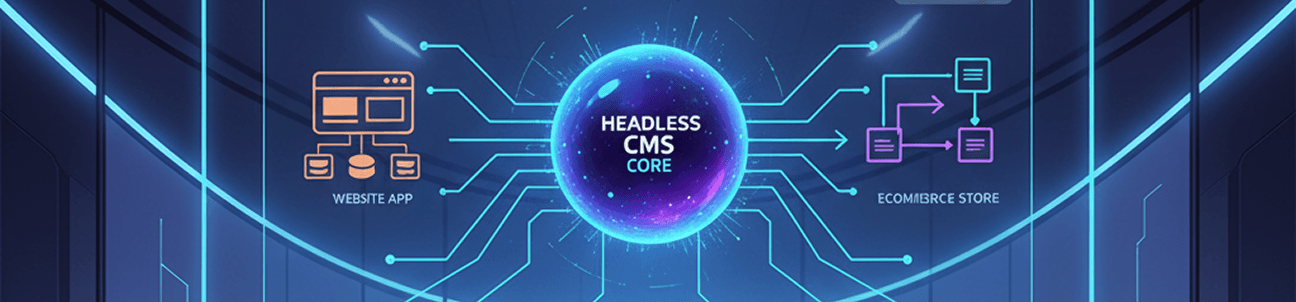
When and Why to Choose a Headless CMS
Choosing a headless CMS is not a routine technology upgrade—it is a strategic decision that shapes how content, teams, and digital platforms evolve over time. While headless CMS offers flexibility and scalability, it also introduces architectural and operational complexity that is not suitable for every organization. This page explains when and why businesses should choose a headless CMS, and when traditional CMS approaches may still be the more effective option.
Why the Headless CMS Decision Is Strategic (Not Trend-Driven)
Many teams consider headless CMS because it is widely adopted by large, modern platforms. In practice, headless CMS delivers value only when it
Choosing headless CMS impacts how teams:
- Structure and reuse content
- Build and maintain frontends
- Integrate marketing and business systems
- Scale across channels and regions
Without strategic alignment, headless CMS can increase complexity without proportional returns.
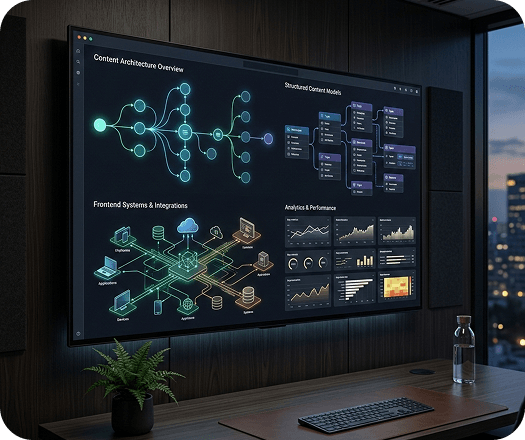

When Choosing a Headless CMS Makes Sense
A headless CMS is typically a strong choice when:
- Content must be delivered across multiple platforms
- Frontend flexibility and performance are priorities
- Content reuse and personalization are required
- Integrations with marketing, commerce, or analytics tools are complex
- Long-term scalability is a business requirement
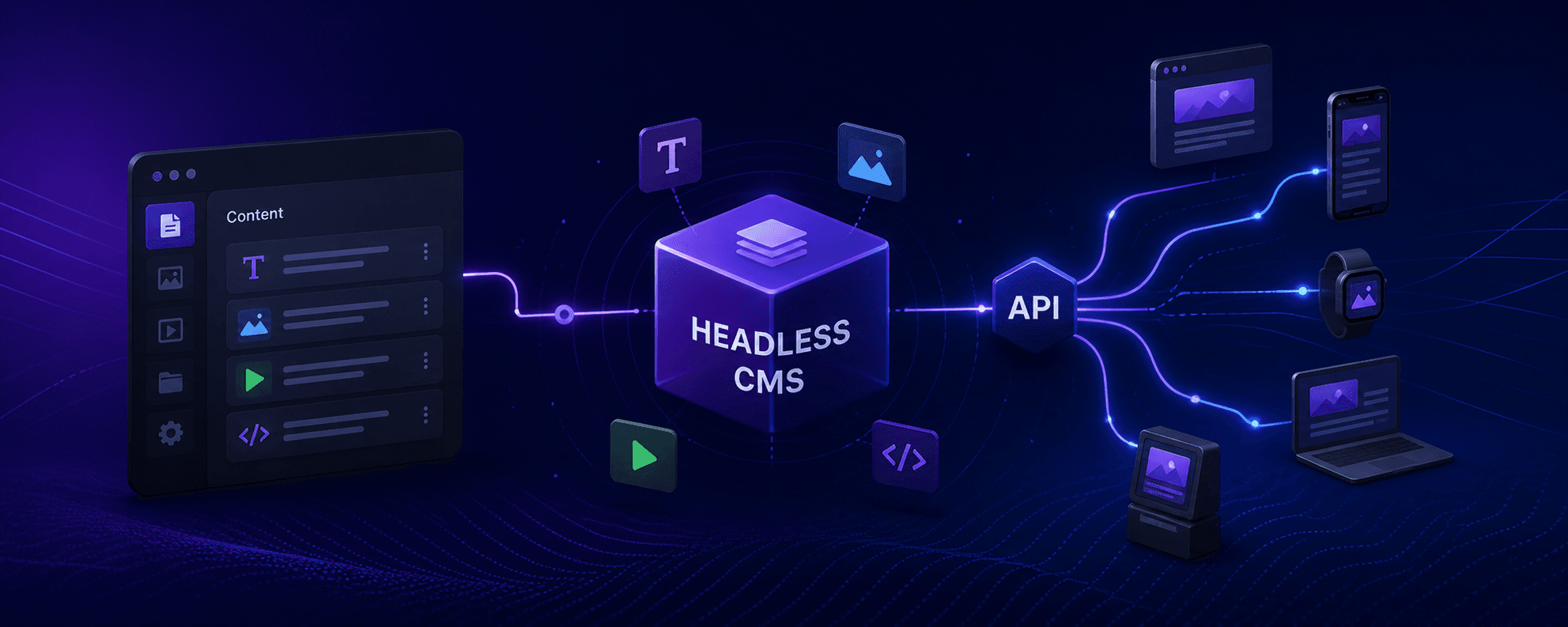
In these scenarios, decoupled content architecture becomes a competitive advantage
Is Your Organization Ready for a Headless CMS?
Use our decision and readiness guide to evaluate content complexity, platform requirements, team workflows, and long-term scalability before committing to a headless CMS.
Despite its advantages, headless CMS is not always the right choice. Traditional CMS platforms can still be effective for many use cases.
A traditional CMS may be more suitable when:
- The website is single-channel and relatively simple
- Speed to launch is more important than flexibility
- Content workflows are minimal
- Internal technical resources are limited
Choosing simplicity when appropriate is a strategic decision—not a limitation.

Cost, Resources & Operational Considerations
Adopting a headless CMS involves different cost and resource considerations than traditional systems. Teams should evaluate:
- Initial implementation and architecture effort
- Ongoing maintenance and system governance
- Frontend and backend coordination
- Content modeling and workflow ownership
Return on investment is realized through flexibility, scale, and performance—not immediate cost reduction.
Common Mistakes When Choosing a Headless CMS
Some frequent mistakes teams make:
- Choosing headless CMS too early
- Selecting tools before defining content strategy
- Underestimating governance and editorial complexity
- Assuming performance gains are automatic
- Ignoring long-term ownership responsibilities
Avoiding these mistakes is often more important than the CMS selection itself.

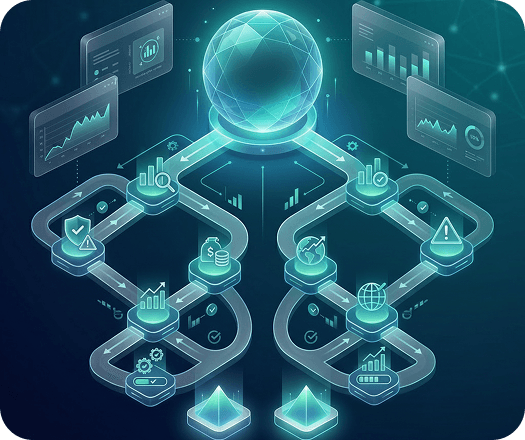
A Practical Decision Framework
The decision to choose a headless CMS should be guided by content strategy, business maturity, and long-term platform goals. Teams must be prepared to manage architectural flexibility responsibly.
Headless CMS works best when organizations are ready to treat content as a scalable system—not just a publishing tool.
How This Decision Fits Into the Bigger Picture
The choice of CMS influences architecture design, performance optimization, composable strategy, and future migration planning. It should never be evaluated in isolation.
This page focuses on decision clarity. A broader strategic perspective is covered in our complete Headless CMS authority guide.

Evaluate Your CMS Decision with a Proven Framework
Use our decision & readiness guide to determine whether your CMS requirements truly align with headless architecture.