

Headless CMS Architecture: APIs, Content Models & Best Practices
Headless CMS architecture is not about replacing one content management system with another—it is about rethinking how content is structured, delivered, and scaled across modern digital platforms. As organizations move toward multi-channel and API-driven experiences, architectural decisions around content become critical. /n This page explains how headless CMS architecture works at a practical level, the role of APIs and content models, and the best practices teams should follow when designing a scalable, future-ready content system.
What Makes Headless CMS Architectural (Not Just a CMS Swap)
Many teams assume headless CMS adoption is simply a tooling change. In reality, headless CMS introduces a fundamental architectural shift in how content is managed and consumed.
Headless CMS architecture introduces:
- Decoupled content and presentation layers
- API-first content delivery
- Independent scalability of content and frontend systems
- Clear separation between content, design, and logic
When these elements are thoughtfully designed, content systems become flexible instead of restrictive.


Core Components of a Headless CMS Architecture
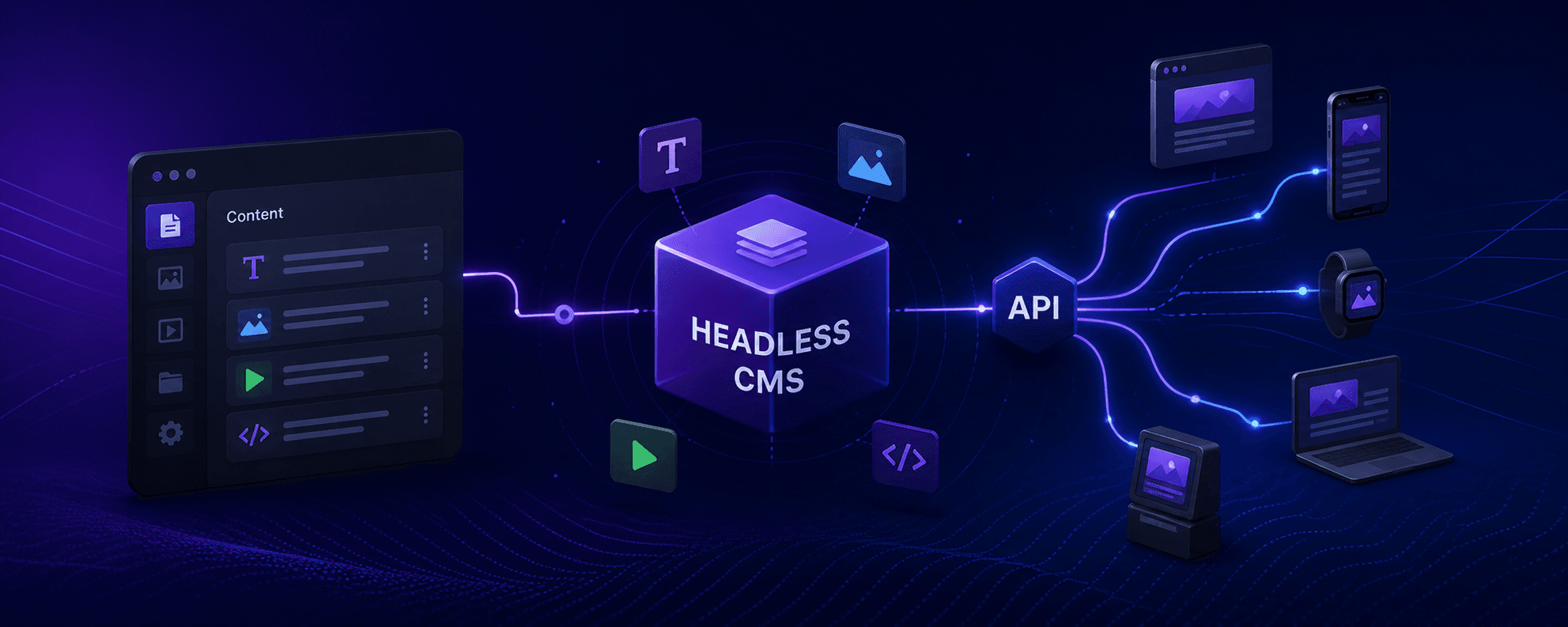
A modern headless CMS architecture typically includes:
- Content Management Layer The CMS handles content creation, modeling, governance, and workflows—without controlling presentation.
- API Layer APIs deliver structured content to websites, apps, and other platforms in a consistent format.
- Frontend Layer Custom frontends consume content independently, allowing full control over UX and performance.
- Integration Layer Marketing tools, analytics platforms, personalization engines, and business systems connect via APIs.
Each layer operates independently while remaining aligned through defined interfaces.
Check Your Headless CMS Architecture Readiness
Use our architecture checklist to evaluate API strategy, content modeling structure, governance workflows, and long-term scalability before implementing a headless CMS.
Role of APIs in Headless CMS Architecture
APIs are the backbone of headless CMS architecture. Instead of templates and page-based rendering, APIs allow content to be delivered dynamically to any platform that needs it.
Key advantages of API-driven content architecture include:
- Channel-agnostic content delivery
- Faster frontend development cycles
- Easier integration with external systems
- Maintain long-term architectural flexibility Improved long-term maintainability
Strong API design and governance are essential to prevent fragmentation and inconsistency.


Content Modeling & Structured Content Design
A headless CMS separates content management from content presentation. Instead of controlling how content is displayed, it focuses solely on storing, managing, and delivering content through APIs.
Well-designed content models support:
- Reusable content across channels
- Clear separation of content types
- Scalable editorial workflows
- Easier localization and personalization
Content modeling should be driven by —not just current pages.
Common Headless CMS Architecture Mistakes to Avoid
Some frequent mistakes teams make:
- Treating headless CMS as a frontend project
- Designing content models based only on page layouts
- Ignoring governance and editorial workflows
- Poor API documentation and versioning
- No long-term ownership or maintenance strategy
Avoiding these mistakes is critical to building a sustainable content architecture.


When Headless CMS Architecture Makes Sense
Headless CMS architecture is most effective for organizations that manage content across multiple platforms, require frontend flexibility, or plan for long-term scale. It is especially valuable for teams working with
For simple, single-channel websites, traditional CMS architectures may still be sufficient.
How This Architecture Fits Into the Bigger Picture
Architecture is only one component of successful headless CMS adoption.
This page focuses on architectural foundations. A broader strategic view is covered in our complete Headless CMS authority guide.
- Faster page loads
- Better Core Web Vitals
- Improved SEO flexibility
- Faster content publishing cycles
These benefits depend on architectural execution, not default configurations.
Ensure Your Content Architecture Is Scalable
Use our architecture checklist to validate APIs, content models, workflows, and long-term governance.