

How Cross-Platform Apps Improve Performance, UX & Scalability
Performance, user experience, and scalability are often treated as separate concerns in mobile app development. In reality, they are interconnected outcomes driven by architectural decisions, framework selection, and implementation discipline. Cross-platform app development changes how mobile applications are built, rendered, and scaled across devices. When implemented correctly, it enables businesses to deliver high-performance mobile experiences while maintaining flexibility and efficiency. This page explains how cross-platform apps impact performance, user experience, and scalability at a structural level—and why these outcomes depend on architecture, not just frameworks.
Why Performance Is an Architectural Outcome
Many teams assume that mobile app performance depends only on frontend optimization or framework choice. However, performance is largely determined by how the application is architected.
Cross-platform app architecture improves performance by enabling:
- Efficient API-driven data delivery
- Optimized rendering strategies
- Reduced backend dependency bottlenecks
- Scalable infrastructure for high traffic
- Better control over caching and state management
When architecture is well-designed, performance becomes predictable and scalable across platforms.


Performance Benefits of Cross-Platform Apps
Well-implemented cross-platform mobile applications can deliver strong performance outcomes across devices.
Key Performance Benefits:
- Faster app load times and screen transitions
- Optimized rendering using native or hybrid approaches
- Reduced development duplication improves efficiency
- Consistent performance across iOS and Android
- Better scalability under increasing user load
Modern frameworks like React Native and Flutter have significantly improved rendering performance and runtime efficiency, making them suitable for most business applications.
User Experience (UX) in Cross-Platform Applications
User experience plays a critical role in the success of mobile applications. Cross-platform development allows teams to maintain consistent UX across devices while optimizing performance.
UX Advantages
- Consistent design systems across platforms
- Faster UI updates and feature rollouts
- Improved interaction consistency
- Reduced design fragmentation
- Ability to implement shared UI components
However, achieving high-quality UX requires careful design and performance optimization—not just shared code.
Framework selection should align with architectural goals—not just developer preference.


Scalability in Cross-Platform Mobile Apps
Scalability is a critical factor for modern mobile applications , especially for startups and enterprises expecting rapid growth.
Cross-platform app development supports scalability through:
- Shared codebase for faster feature expansion
- API-driven backend systems
- Cloud-based infrastructure
- Modular application architecture
- Easier integration with third-party services
These capabilities allow applications to grow without requiring complete rewrites or major architectural changes.

Validate Your Mobile App Performance Strategy
Use our optimization checklist to evaluate performance, UX consistency, API efficiency, and scalability readiness for cross-platform mobile applications.
Common Performance & UX Pitfalls to Avoid
Some common mistakes teams make include:
- Overloading APIs with excessive data requests
- Poor state management and inefficient rendering
- Ignoring performance optimization during early development
- Not testing across real devices and conditions
- Treating UX as secondary to development speed
Cross-platform development amplifies both strong and weak architectural decisions, making early planning critical.

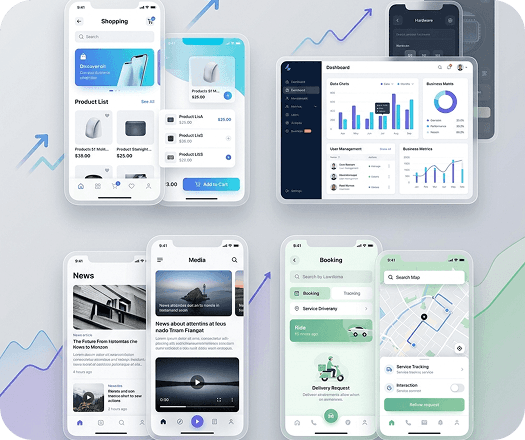
When Performance & Scalability Justify Cross-Platform Development
Cross-platform app development delivers the most value when performance, scalability, and user experience directly impact business success.
It is particularly effective for:
- E-commerce mobile applications
- SaaS and enterprise platforms
- Content-driven mobile apps
- On-demand service applications
For highly performance-intensive or hardware-specific applications, native development may still be more suitable.
How Performance & UX Fit Into the Bigger Strategy
Performance, UX, and scalability must align with broader architectural decisions, composable design, framework selection, and long-term development strategy.
This page focuses on performance outcomes. A broader strategic perspective is covered in our complete cross-platform app development guide.

Check Your Cross-Platform App Performance & UX Readiness
Download the checklist used by teams to validate mobile performance, UX design, rendering strategies, and scalability planning.