

Cross-Platform vs Native App Development: A Strategic Decision Guide
Choosing between cross-platform and native app development is not just a technical decision—it is a strategic product decision that impacts performance, scalability, development speed, and long-term maintenance. Many organizations approach this choice based on trends or assumptions, rather than aligning it with product goals, user expectations, and technical requirements. This page provides a clear, architecture-driven comparison of cross-platform vs native app development, helping decision-makers evaluate which approach is best suited for their mobile strategy.
Understanding the Core Difference
At a fundamental level, the difference between cross-platform and native development lies in how applications are built and deployed.
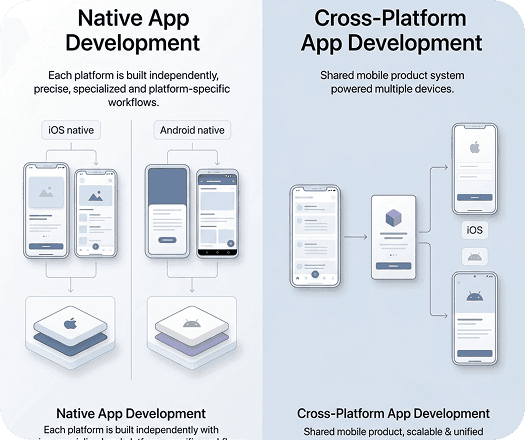
Native App Development
Native apps are built specifically for each platform:
- iOS → Swift / Objective-C
- Android → Kotlin / Java
This approach provides full access to device capabilities and optimized performance.
Cross-Platform App Development
Cross-platform apps are built using a shared codebase that runs across multiple platforms using frameworks like:
- React Native
- Flutter
- .NET MAUI
This approach focuses on efficiency, scalability, and faster development cycles

Key Differences Between Cross-Platform and Native Apps
Development Approach
- Native → Separate codebases for each platform
- Cross-Platform → Shared codebase across platforms
Development Speed
- Native → Slower (parallel development required)
- Cross-Platform → Faster (single codebase)
Performance
- Native → Maximum performance
- Cross-Platform → Near-native performance (with proper architecture)
Maintenance
- Native → Higher maintenance complexity
- Cross-Platform → Easier updates and feature rollouts
Cost
- Native → Higher development and maintenance cost
- Cross-Platform → More cost-efficient
User Experience
- Native → Fully optimized per platform
- Cross-Platform → Consistent UX across platforms
When Cross-Platform Development Is the Right Choice
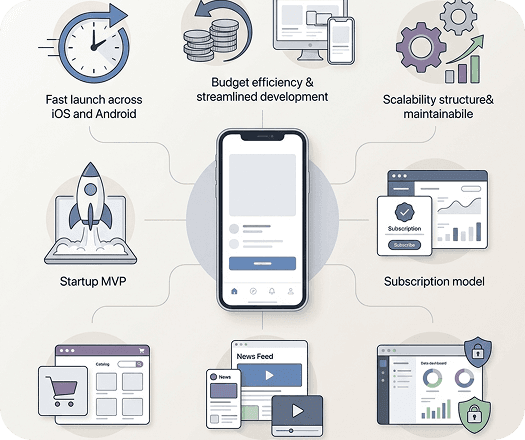
Cross-platform app development is ideal when:
- You need to launch on both iOS and Android quickly
- Budget and development efficiency are important
- Consistent user experience across platforms is required
- The app does not require heavy hardware-level processing
- Scalability and long-term maintainability are priorities
Cross-platform is widely used for:

When Native Development Is the Better Option
Native development is often the better choice when:
- High-performance graphics or animations are required
- The application relies heavily on device hardware
- Advanced AR/VR features are needed
- Platform-specific features are a core requirement
- Ultra-optimized performance is critical
Examples include:
- Gaming applications
- Real-time processing apps
- Hardware-integrated solutions
Choosing native in these scenarios ensures optimal performance and control.

Make the Right Mobile Development Decision
Use our decision framework to evaluate cross-platform vs native development based on performance, scalability, cost, and long-term goals.
Cost, ROI & Long-Term Scalability
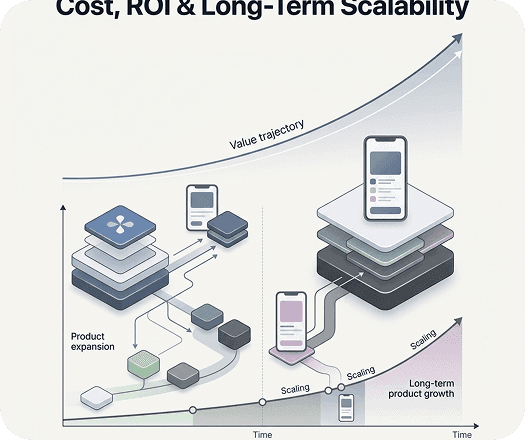
The decision between cross-platform and native development should consider long-term ROI, not just initial development cost.
Cross-Platform ROI Advantages
- Reduced development and maintenance costs
- Faster time-to-market
- Shared resources across platforms
- Easier scalability and updates
Native ROI Considerations
- Higher initial investment
- Greater control over performance
- Platform-specific optimization benefits
In many business cases, cross-platform development offers a better balance between cost, speed, and scalability.

Common Decision-Making Mistakes
Some common mistakes include:
- Choosing based on trends instead of requirements
- Prioritizing cost over long-term scalability
- Ignoring performance requirements
- Not considering team expertise
- Underestimating maintenance complexity
A structured evaluation process is essential for making the right decision.
How to Make the Right Choice
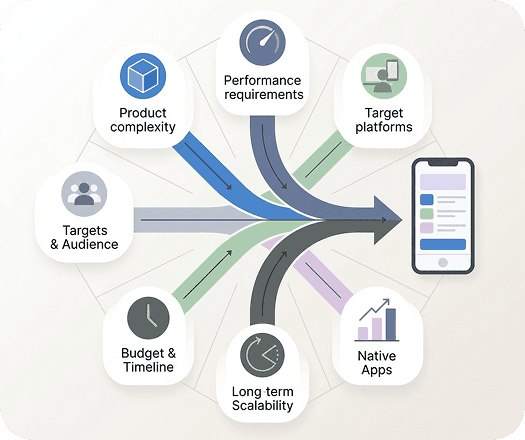
To choose between cross-platform and native development, organizations should evaluate:
- Product complexity
- Performance requirements
- Target platforms and audience
- Budget and timeline
- Long-term scalability goals
The best approach is the one that aligns with business objectives—not just technology preferences.

How This Decision Fits Into the Bigger Strategy
The choice between cross-platform and native development is only one part of a broader mobile strategy. It must align with architecture, performance, development workflows, and long-term product growth.
This page focuses on decision-making. A broader strategic perspective is covered in our complete cross-platform app development guide.
Choose the Right Mobile App Development Approach
Download the decision framework used by teams to evaluate cross-platform vs native app development strategies.